Pale of Settlement
The Captain and Ann BarbaraThe Pale of Settlement was the vast western border region of the Russian Empire to which Jews were legally confined, a territory that functioned as a prison for an entire people. For Mary Antin, born in Polotzk within its boundaries, the Pale was the first and most fundamental lesson of her childhood—a wall of law and prejudice that defined her people as prisoners, and whose memory would later throw into sharp relief the freedoms of her American life. It was not merely a geographical designation but a legal and spiritual condition, a fence around a people that the Czar commanded to stay, and within which every Jew was born, lived, and was expected to die.
The Legal Geography of Confinement
The Pale of Settlement was not a single, uniform territory but a grouping of provinces—Polotzk, Vitebsk, Vilna, and other places—where Jews were permitted to reside. The Czar commanded that all Jews remain within this area, and they were forbidden to be found outside it, on pain of seizure and punishment. The knowledge of this confinement came to Mary gradually, trickling into her consciousness drop by drop, so that by the time she fully understood she was a prisoner, the shackles had grown familiar to her flesh. The world was divided into Jews and Gentiles, and the Pale was the physical manifestation of that division, a fence around Polotzk that was both literal and metaphorical.
The legal restrictions extended far beyond mere residence. Jews were subject to a bewildering array of taxes and duties: taxes on houses, on rents, on business, on profits, levied by the town, the county, and the central government. There were taxes for public works, yet rotten pavements went on rotting year after year, and special taxes were levied when a bridge was to be built. Even a railroad bridge across the Dvina, while open to the military, could be used by the people only by individual permission. The excise duties on tobacco were particularly onerous, with the tobacco, the paper, and the mouthpiece each taxed separately, and an additional tax on the finished product—though, as Mary noted with bitter irony, there was no tax on the smoke.
The Economic Strangulation of the Pale
The congestion of population within the Pale made economic survival nearly impossible. There were ten times as many stores as there should have been, ten times as many tailors, cobblers, barbers, and tinsmiths. A Gentile who failed in Polotzk could go elsewhere, where there was less competition, but a Jew could make the circle of the Pale only to find the same conditions at home. Outside the Pale, a Jew could go only to certain designated localities, on payment of prohibitive fees augmented by a constant stream of bribes, and even then lived at the mercy of the local chief of police.
Artisans had the right to reside outside the Pale on fulfilment of certain conditions, but this right was precarious. A capmaker who had duly qualified by passing an examination and paying for his trade papers could have his papers impeached by a capricious chief of police, forcing him to travel to St. Petersburg to repeat the examination, spending the savings of years in petty bribes, only to be expelled by a new chief of police who discovered a new flaw in the papers he had just obtained. Merchants fared no better; even a merchant of the First Guild, a title that cost a substantial annual fee and a percentage of profits, could travel outside the Pale only twice a year, for not more than six months in all, and faced a fine exceeding all he had gained if found outside after his permit expired.
The economic pressure drove Jews to cheat the Government of part of its duties, a dangerous game with spies watching the Czar's interests. People who sold cigarettes without the government seal got more gray hairs than bank notes out of their business, living in constant risk, worry, and dread of a police raid in the night. This necessity created what Mary called a dual conscience, which allowed a Jew to do to a Gentile what he would call a sin against a fellow Jew. Such spiritual deformities, she argued, were self-explained in the step-children of the Czar, who were cooped up thousands where only hundreds could live, every means of living taxed to the utmost, and who did as do the hungry brutes when there are too many wolves in the prairie.
The Religious Fortress Within the Wall
Within the wall raised around the Pale by the vigilance of the police, there stood another wall, higher, thicker, and more impenetrable—the religious integrity of the Jews. This wall within the wall was a fortress erected by the prisoners of the Pale in defiance of their jailers, a stronghold built of the ruins of their pillaged homes and cemented with the blood of their murdered children. Harassed on every side, thwarted in every normal effort, and pent up within narrow limits, the Russian Jew fell back upon the only thing that never failed him: his hereditary faith in God. In the study of the Torah he found the balm for all his wounds; the minute observance of traditional rites became the expression of his spiritual cravings; and in the dream of a restoration to Palestine he forgot the world.
On a Sabbath or festival, when life was centred in the synagogue, it mattered not what czar sat on the throne or what evil counsellors whispered in his ear. The Jew was intent on renewing his ancient covenant with God, and the flame of the burning bush that had dazzled Moses still lighted the gloomy prison of the Pale. Behind the mummeries, ceremonials, and symbolic accessories, the object of the Jew's adoration was the face of God. This close relation to God was the source of the strength that sustained the Jew through all the trials of his life in the Pale, and the heroism with which he met the battalions of tyrants.
The Burden of Military Service
Military service was one of the most dreaded burdens of life in the Pale. Every man had to serve in the army for four years, and a Jewish recruit was likely to be treated with severity no matter if his behavior were perfect. The necessity of breaking the Jewish laws of daily life while in the service was the thing that really mattered: a soldier often had to eat trefah and work on Sabbath, shave his beard, and do reverence to Christian things. He could not attend daily services at the synagogue, and his private devotions were disturbed by the jeers and insults of his coarse Gentile comrades. When he returned home at the end of his term, he could not rid himself of the stigma of those enforced sins, for four years he had led the life of a Gentile.
Most men of twenty-one, the age of conscription, were already married and had children, and during their absence their families suffered and their business often was ruined. At the end of their term they were beggars, sent home with a free ticket for the return journey and a few kopecks a day for expenses, hurried back into the Pale like escaped prisoners. If within a limited time they were found outside the Pale, they would be seized and sent home in chains. The fear of service drove men to inflict injuries on themselves—operations on their eyes, ears, or limbs—in the hope of being rejected at the physical examination, often resulting in permanent deformities that were easier to bear than the memory of four years in the Czar's service.
The Czar always got his dues, no matter if it ruined a family. A poor locksmith who owed the Czar three hundred rubles because his brother had escaped from Russia before serving his term had his household goods attached, including his young bride's trousseau, and the sale brought only thirty-five rubles. After a year the police came again, putting their seal on everything they found, leaving not even a sheet to wrap the bride's first baby in when he was handed up for circumcision the next day. Only by false means—a false passport, a false certificate of the missing brother's death—could the locksmith secure peace for himself and his family, as long as the Czar was after his dues.
The Memory of the Pale in America
The Pale remained a defining reference point for Mary long after she left it. In America, she liked to remind herself of Polotzk, the better to bring out the wonder of her life. That she who was born in the prison of the Pale should roam at will in the land of freedom was a marvel that it did her good to realize. That she who was brought up to her teens almost without a book should be set down in the midst of all the books that ever were written was a miracle as great as any on record. That an outcast should become a privileged citizen, that a beggar should dwell in a palace—this was a romance more thrilling than poet ever sung.
The contrast between the Pale and America was stark and pervasive. In the Pale, a Jew could hardly exist in business without developing a dual conscience; in America, the Constitution of the United States guaranteed the right to have any kind of God one chose, and the separation of church and state was a doctrine to be honored. In the Pale, justice was administered at the whim of the police and the Czar; in America, when a great, hulky colored boy treated Mary roughly while she was playing on the street, her father had him arrested and brought to court, where accused and accuser, witnesses, sympathizers, and sight-seers all gathered, and nobody cringed, nobody was bullied, and nobody lied who didn't want to. The evil-doer was actually punished, and not the victim, as might very easily happen in a similar case in Russia.
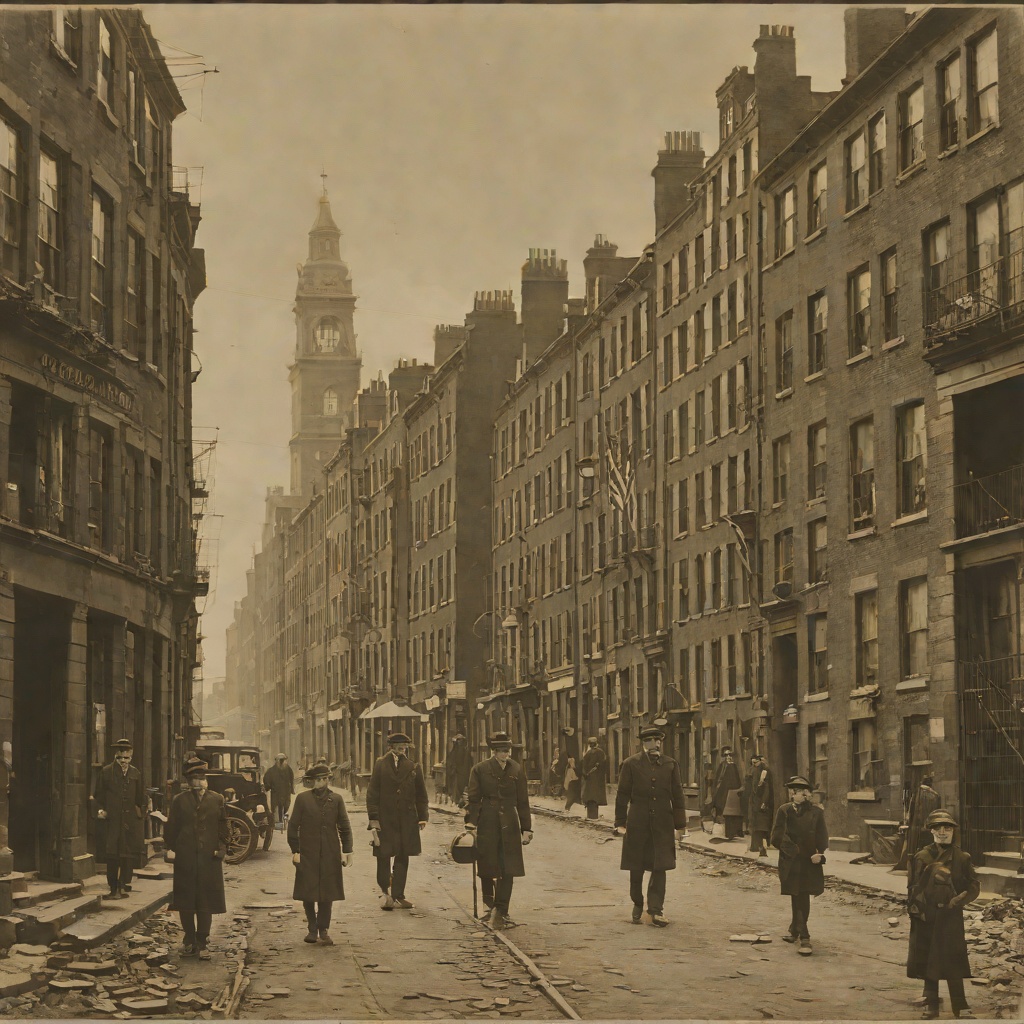
The memory of the Pale also shaped Mary's perception of her new surroundings. The slums of Boston's West End, where she first lived in America, were a tenement district, but to her eyes they appeared as two imposing rows of brick buildings, loftier than any dwelling she had ever lived in, with brick even on the ground for her to tread on instead of common earth or boards. The three small rooms of her new home, with their lean mattresses and wooden chairs, impressed her family not only because they had just passed through their seven lean years, but chiefly because they were in America. The Pale had taught them to measure poverty differently, and freedom had transformed the meaning of even the meanest dwelling.
Even the physical spaces of the Pale lingered in Mary's imagination as a measure of what she had escaped. Her grandfather's house in Polotzk, where she was born, stood in her memory as a small, one-story wooden building whose chimneys touched the sky at the same level as its neighbors' chimneys, with a yard screened from the street by a board fence and a gate that swung so high from the ground that pigs found their way in and were shown the way out under it. This humble dwelling, with its blue sash curtain and view of a narrow, walled garden where deep-red dahlias grew, was the birthplace of a girl who would one day roam at will in the land of freedom, and the contrast between the two worlds was the central romance of her life.